About Me
Who is behind the pipelines.
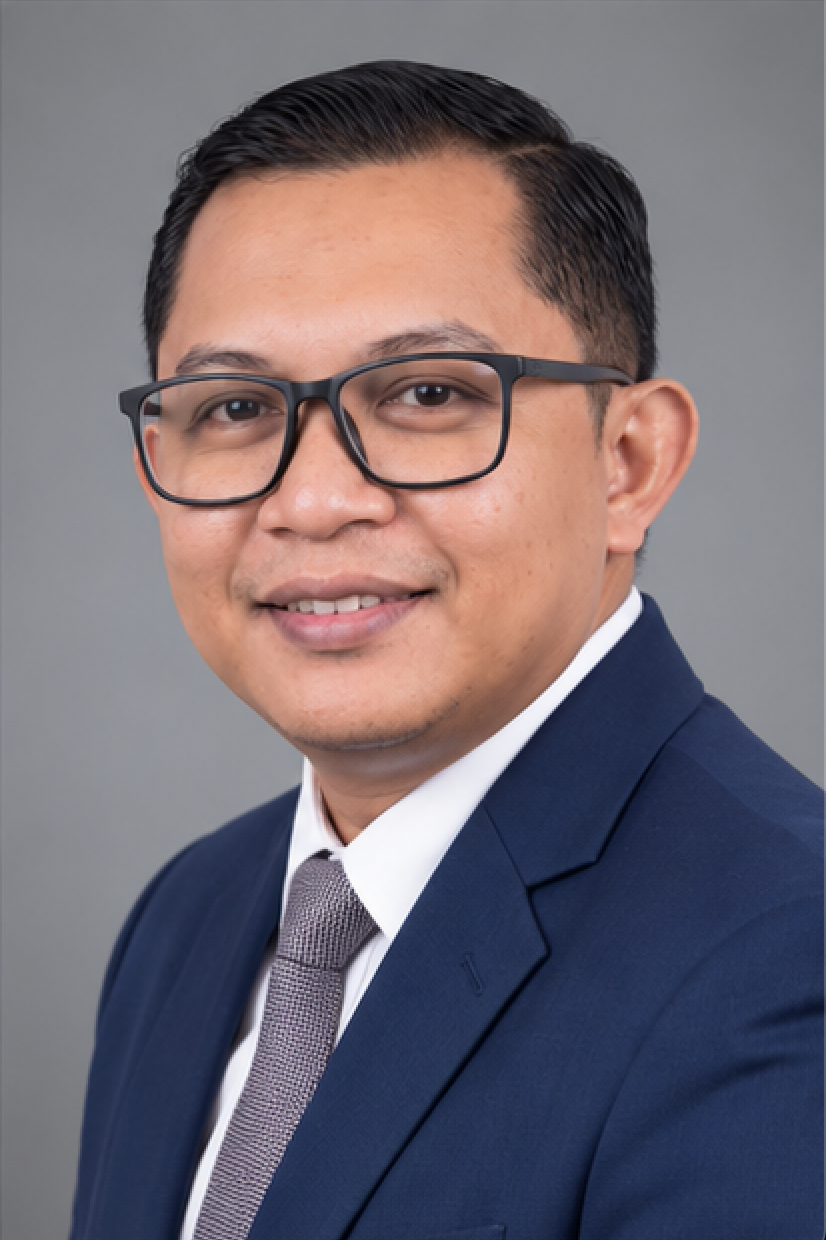
I build computer vision systems for real-world environments, where noisy CCTV feeds, moving dashcams, aerial footage, and challenging industrial conditions are the norm. Over the last 5+ years, I’ve taken projects from data collection and annotation strategy through model training, optimisation, and on-site deployment.
The thread across my recent work is applied generative AI on top of vision: combining detection models with fine-tuned LLMs and VLMs that re-evaluate detections in context before deciding whether to confirm, drop, or correct an alert. The result is a vision pipeline that can reason about context rather than relying on detection alone.
Architects Computer Vision deployments end to end and fine-tunes LLMs (Qwen, LLaMA) as reasoning layers on top of them. Leads a data annotation team and owns internal labeling tooling for image, video and segmentation workflows.
Smart-city ANPR and landslide/dumping detection (~50 cameras, MPS), Perodua Smart Mobility Plant safety compliance, Petronas Research housekeeping monitoring (179 cameras), international PPE deployment for PCTSB, national road surveys and drone patrols.
Completed while working full-time as a Machine Learning Engineer.
-
Keras Implementation in Detecting Intracranial Hemorrhage and Multiclass Classification of Subtypes via Transfer Learning and Classifiers Selection
Mekatronika — Journal of Intelligent Manufacturing & Mechatronics · 2024doi.org/10.15282/mekatronika.v6i2.11358
-
The Diagnosis of COVID-19 by Means of Transfer Learning through X-ray Images
ICCAS — IEEE International Conference on Control, Automation & Systems · 2021doi.org/10.23919/ICCAS52745.2021.9649899
-
The Diagnosis of COVID-19 Through X-Ray Images via Transfer Learning and Fine-Tuned Dense Layer on Pipeline
Mekatronika — Journal of Intelligent Manufacturing & Mechatronics · 2021doi.org/10.15282/mekatronika.v3i2.7161
-
The Diagnosis of COVID-19 Through X-Ray Images via Transfer Learning Pipeline
Springer — Lecture Notes in Electrical Engineering · 2021doi.org/10.1007/978-3-030-70917-4_36